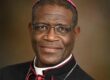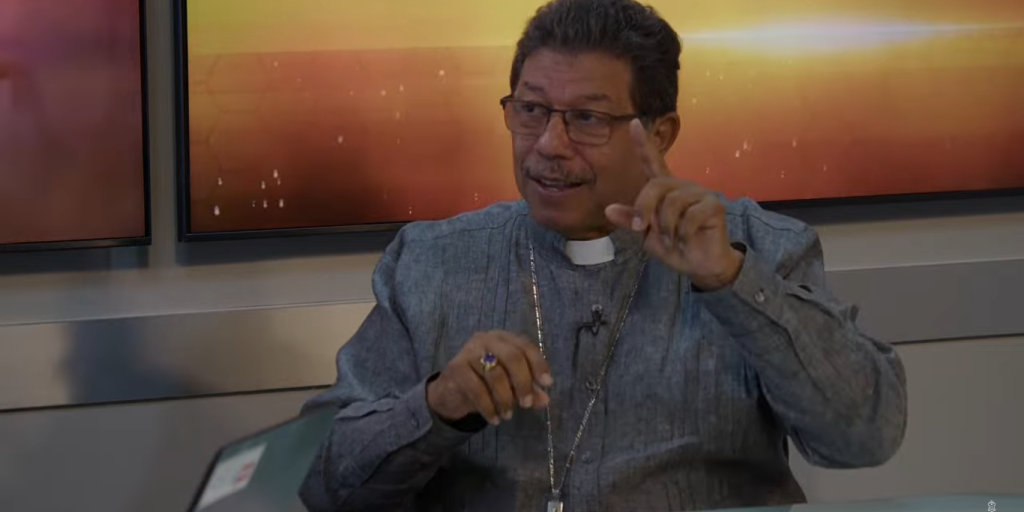
Archbishop Charles Jason Gordon today called for urgent national action to protect children from what he described as a “silent national emergency,” as Church leaders, psychologists and educators warned that suicide, self-harm and trauma among young people in Trinidad and Tobago have reached crisis levels.
Speaking at a media conference titled ‘The Urgency of Now: A National Call to Save Our Children’, hosted by the Samaritan Movement at the Archbishop’s House on Monday, January 19, Archbishop Gordon said the country could no longer ignore the impact of social media, pornography and systemic strain on children and families.
“We have to be candid, and we have to be honest,” he said. “We know there is something about the cellphones and social media that has created sleeplessness, anxiety. It has created in our children a sense of identity crisis—they’re not good enough; they don’t get enough likes, a comparison that is on steroids,” he said.
The Archbishop proposed legislative measures similar to recent restrictions on alcohol and gambling, including age limits and penalties aimed at internet providers of pornography, not parents or children. He also urged consideration of laws to restrict children’s access to social media and pornography, arguing that technology already exists to filter harmful content. “If we were to do that, we would reclaim childhood very quickly,” he said.
A quiet emergency
The media conference marked the public launch of a renewed national push by the Samaritan Movement, a Church-supported initiative focused on mental and emotional well-being, particularly among children and young people.
General Manager of the Samaritan Movement, Darrion Narine, said the organisation was compelled to speak out because the scale of the problem could no longer be ignored.
“We are here today because something is deeply wrong and we can no longer afford to whisper about it,” Narine said. “We are seeing high levels of self-harm, we’re seeing high levels of suicidality and it can no longer be ignored.”
He described what he called a “quiet devastation emergency” affecting children and young people across the country. “Suicide, self-harm, anxiety, depression, trauma, these are no longer rare or isolated experiences. They’re becoming common stories in our homes, our schools, our churches, and our communities,” he said.
Narine stressed that the Samaritan Movement is grounded in prevention and early intervention. “When a child harm themselves, it’s not a failure of that child, it’s a failure of the system. It’s a failure of the support; it’s a failure of society to notice, to listen and to intervene early enough,” he said.
Pandemic as turning point
Clinical psychologist Isolde Ali Ghent, who has practised in Trinidad and Tobago since 1997 and has been involved with ChildLine for 25 years, said while suicidal ideation existed long before COVID-19, the pandemic marked a turning point.
“What has changed…is the pattern, it’s the intensity and the context in which we now practice and in which we’re now seeing our families in crisis,” she said.
Ali Ghent warned that suicidal thinking is now emerging at younger ages, escalating more rapidly and appearing with less emotional provocation. “Impulsivity is much more exponentially stronger,” she said, noting that many young people are living in a state of chronic hypervigilance.
She also highlighted data from ChildLine, stating that between 2020 and 2025, approximately 1,500 calls and messages related to self-harm and suicidal ideation were recorded, mostly from young people aged 12 to 17. “And that’s just our interim statistics,” she said, underscoring the need for expanded counselling, family-based support, school interventions and trauma-informed responses across systems.
Children are not coping
Vanessa Yearwood, Quality Assurance Manager at the Catholic Education Board of Management and a former teacher and principal with more than 30 years’ experience, said schools are increasingly on the front lines of the crisis.
“Our children are not okay, we look at them and think they are coping, they are not okay,” Yearwood said. She noted that self-harming behaviours, once associated mainly with secondary schools, are now appearing at the primary level. “That’s frightening,” she said, adding that teachers are often untrained and unsupported when these incidents occur.
Rev Dr Gerard McGlone SJ, consultant to the Samaritan Movement, described the situation as devastating. “Your country’s children are suffering at levels of pain and hurt I’ve rarely seen in my clinical practice,” he said.
Citing data validated by ChildLine and Lifeline, McGlone said, “40 per cent of your children are saying they’re thinking of suicide. We are in a crisis; this is astronomical numbers.”
He said the Samaritan Movement is working to promote trauma-informed teaching, self-care for educators and suicide first-aid responses. “To become first responders to our children in need,” he said.
The speakers collectively called for coordinated national action involving parents, schools, policymakers, faith-based organisations and communities.
As Narine underscored, “Today’s press conference is not about panic…it’s about naming this mental health crisis honestly, mobilising collective action and saying with one voice our children’s lives matter more than our discomfort, our stigma or our silence.”