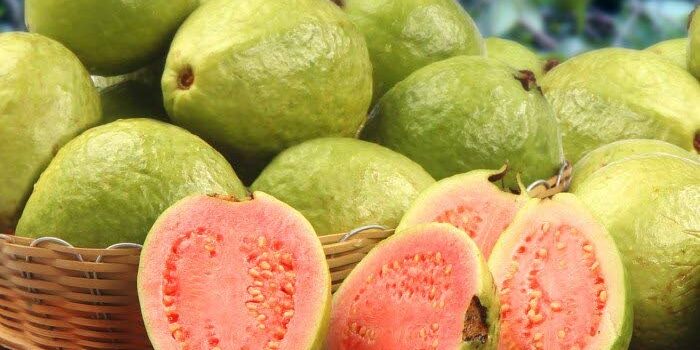
Q: Archbishop J, how do we hold on to Hope in a guava season?
In Trinidad and Tobago, we know what a ‘guava season’ means. It is that time when the tree bears little fruit, when the cupboard is light, when ends refuse to meet—no matter how you stretch them.
In our local speech, a ‘guava season’ is a time of hardship—financial, emotional, and spiritual. This year, the season has become painfully real.
I was recently stopped by a young man still in his school uniform. His eyes told the story before he spoke: he had not eaten in days. Both his parents had lost their jobs. Everything in his life had collapsed at once, and he did not know where help would come from.
I have met others—people who once lived with dignity and stability—now desperate for assistance. Some who used to help the poor are now standing in the same lines they once supported. Communities offering food have seen numbers swell beyond anything they expected. We are living through a national guava season.
And so the question arises from many hearts: How do we hold on to hope when the cupboard is bare? How do we rejoice when life feels so heavy?
Padre Pio once said, “Hope is the hand that keeps us clinging to God, even when everything seems lost.” Hope is not optimism or wishful thinking. Hope is a theological virtue—a gift from God Himself. It reorients the soul away from self-reliance and toward the God who never abandons His people. Hope opens a window where the world sees only walls.
This week, the Church celebrates Gaudete Sunday—Rejoice Sunday. In the middle of Advent’s sober waiting, the liturgy interrupts us with a command: “Rejoice in the Lord always; again I say, rejoice!” (Phil 4:4) But how do we rejoice in a season like this?
Joy in a time of hardship
Christian joy is not emotional happiness. Catholic tradition teaches that joy is a deep spiritual disposition—a fruit of the Holy Spirit that blooms in the soil of difficulty. It is the quiet strength that flows from knowing we are held in God’s love even when life is falling apart.
Pope Francis reminds us that this joy is born from “encountering Christ,” especially in our poverty. It arises not from what we possess but from the One who possesses us. Joy and hope, then, are not feelings. They are stable orientations of the heart.
The nearness of God in hard times
Gaudete Sunday proclaims one truth: The Lord is near. God draws close to the broken-hearted, the anxious parent, the jobless father, the elderly person alone in a darkened home, the young child who has not eaten: our joy, fragile as it may seem, springs from this divine nearness. God does not watch our crisis from afar—He is with us in it.
Hope grows when we shift our gaze from our scarcity to His abundance, from our weakness to His strength, from our fears to His promises.
Advent: a time to stay awake
Advent calls us to stay awake, not through fear but through generosity and sobriety of heart. It is the season when we contemplate God’s profound generosity. He became flesh for us, choosing the poverty of Bethlehem as His home. The Incarnation is God’s great self-gift to humanity.
In response, Advent invites us to become generous people, awake to the needs around us, sober enough to see Christ hidden in the hungry, the unemployed, the struggling families, the lonely elderly, the child in distress.
The Gospel of this Sunday gives us the measure of true discipleship. Jesus says:
“Go back and tell John what you hear and see: the blind see again, the lame walk, lepers are cleansed, the deaf hear, the dead are raised to life, and the Good News is proclaimed to the poor.” (Mt 11:4–5)
This is the manifesto of the Messiah. Where Jesus is present, lives are restored. The poor receive Good News—not simply words, but tangible care, dignity, and hope. Those who encounter Him are changed, and those who follow Him become instruments of His mercy.
Advent teaches us that we cannot say we await the Lord while closing our eyes to the suffering around us.
To stay awake is to be alert to those who are falling behind.
To stay awake is to let our hearts break open for others.
To stay awake is to imitate the generosity of God.
We who have must share with those who do not have. This is not charity alone; it is discipleship.
Joy as resistance
In the Caribbean, we often find joy in the most unexpected places—on the lips of someone grieving, in the prayer of someone hungry, in the hymn of a people who have been battered yet refuse to be broken.
Christian joy is a form of spiritual resistance.
It says to despair: You will not have the final word.
It says to fear: You do not define us.
It says to hardship: We are God’s people, and He is faithful.
To rejoice in a guava season is not denial of reality. It is an act of faith.
The social face of joy
When Isaiah proclaims that God brings Good News to the poor, heals the broken-hearted, and lifts the lowly, he reveals that Christian joy is never private. It is always social.
Joy moves the Christian to concrete acts of mercy and justice. It propels us toward the vulnerable. It deepens our solidarity with those who suffer.
If ever there was a time to check on a neighbour, share a meal, offer employment, or support a community pantry, it is now. God’s joy multiplies when it is given away.
What does hope look like in a guava season?
Hope does not deny our storms. Hope stands in the storm and says:
“God will not abandon us. God is near. God is doing something new.”
Hope looks like a family praying when they have little.
Hope looks like a young person asking for help rather than giving up.
Hope looks like a stranger choosing kindness in a grocery line.
Hope looks like communities multiplying their loaves and fishes.
Hope looks like those who have just enough, sharing with those who have nothing.
Hope looks like a candle lit against the darkness of Advent.
Hope looks like faith in motion.
Rejoice: the dawn is closer than you think
Advent teaches us a profound truth: We rejoice before the miracle is complete. We celebrate the dawn even while standing in the night.
When Mary sang her Magnificat, nothing had yet changed externally—but everything had already changed spiritually. She rejoiced in God’s promise before she saw its fulfilment. This is the mark of a mature Christian heart.
Key Message:
The guava season is real. But so is God’s promise.
Action Step:
This Advent, if you have, please share with those who do not have. With those who take care of the poor. If you know a neighbour, family member or friend who is without, share what you have, invite them for Christmas Day, share your gifts with them. And let us dare to rejoice—not because life is easy, but because God is faithful.
Scripture for Reflection:
Mt 11:2 –11