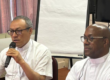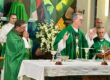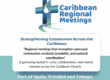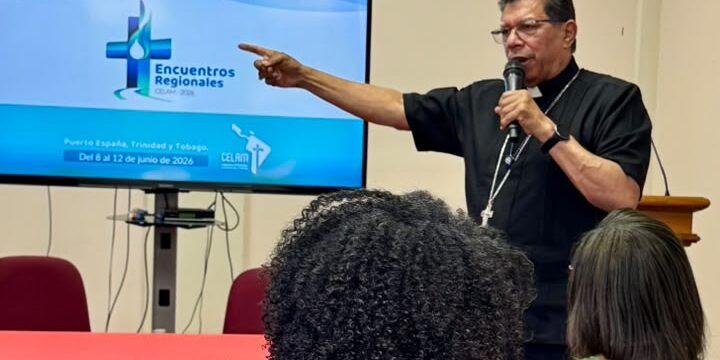
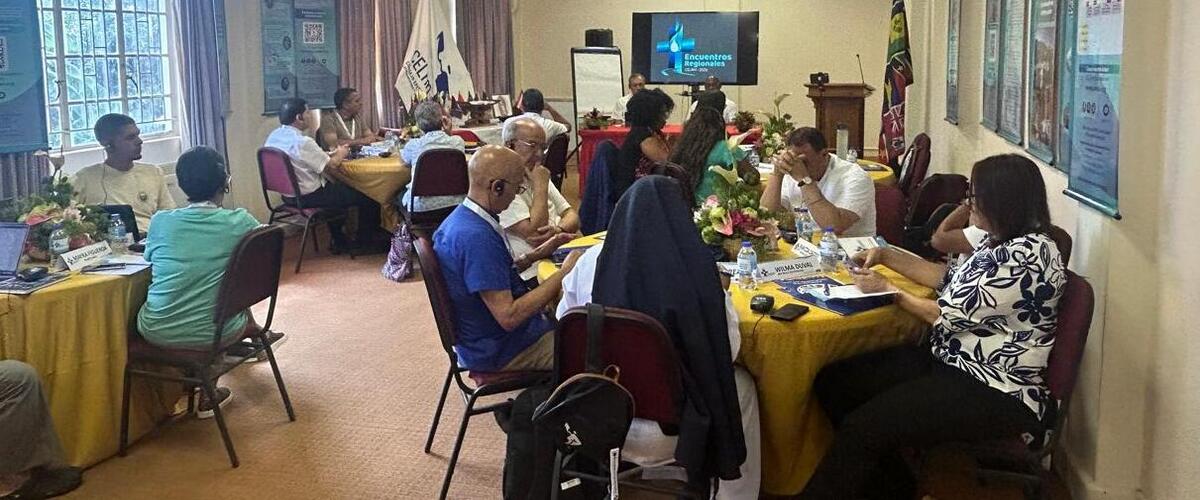
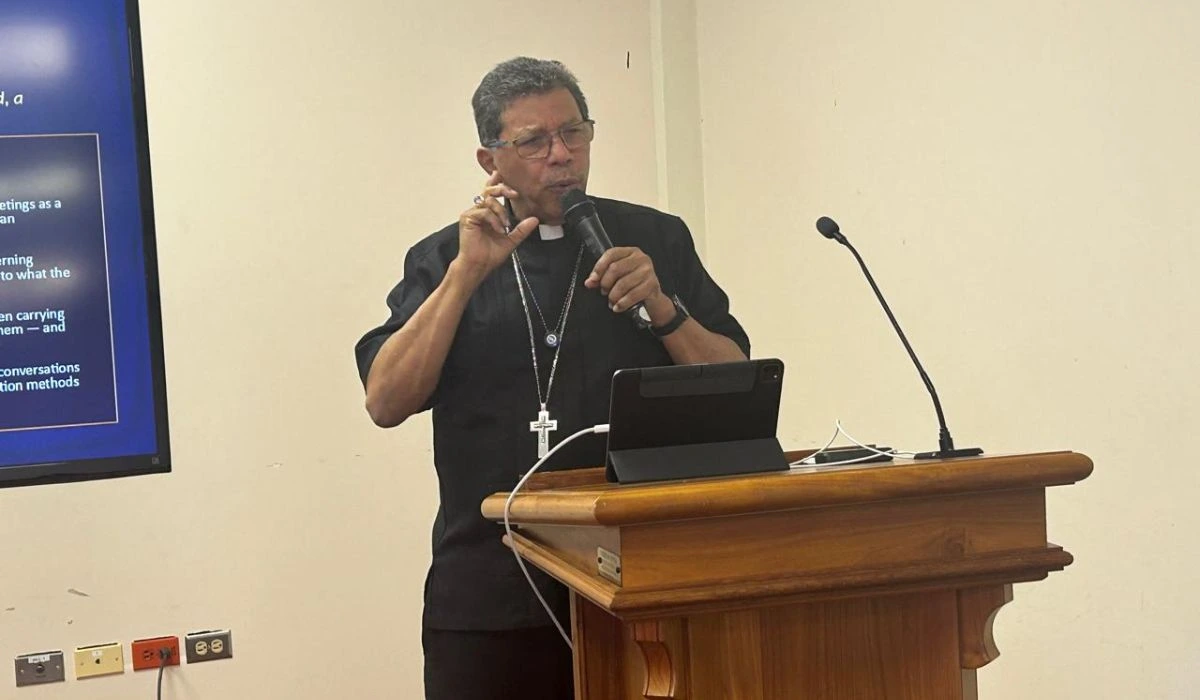
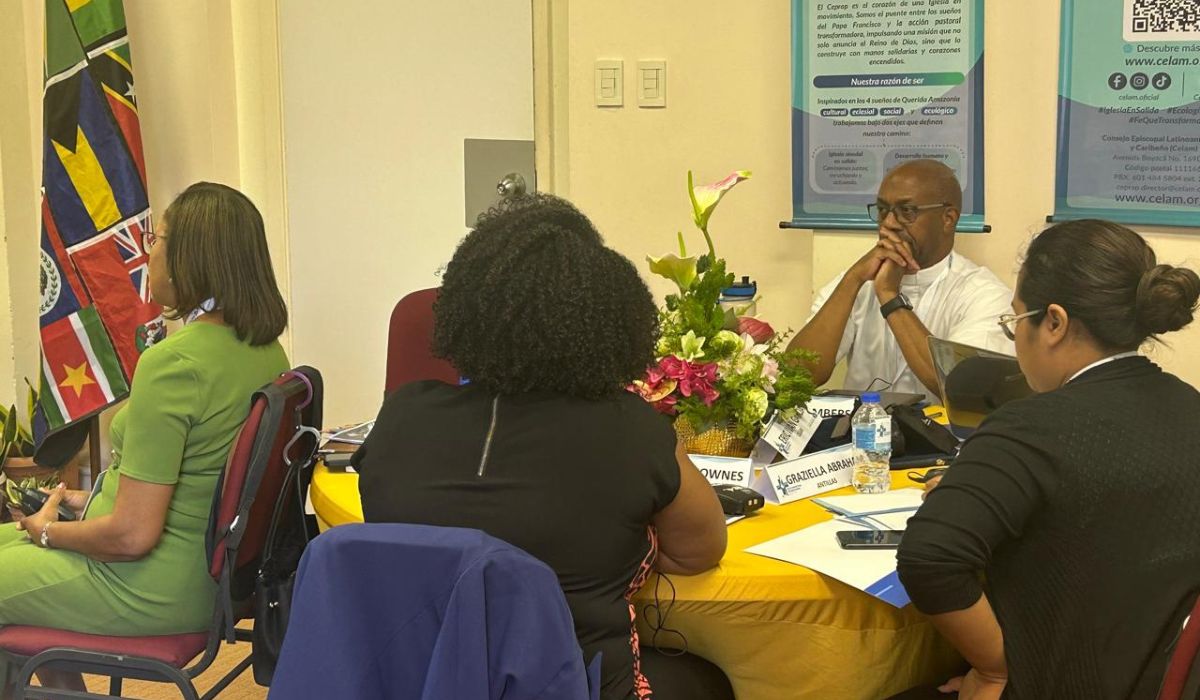
From June 8 to 11, Trinidad and Tobago hosted the Caribbean Regional Meeting convened by CELAM, a space in which Archbishop Charles Jason Gordon , Archbishop of Port of Spain and President of the Episcopal Conference of the Antilles, presented a theological-pastoral reflection from a synodality perspective.
Reflecting on the journey undertaken by the bishops of the Antilles , Bishop Gordon noted that the monthly virtual meetings have been “a true grace.” He affirmed that this practice has helped strengthen “the quality of dialogue, honesty, relationships, and bonds ” among the bishops, fostering a shared discernment about the Caribbean reality and about “what we as a Church can do to truly address what is happening.”
In his address, the prelate mentioned that the bishops’ journey of listening and discernment led them back to the Aparecida document and the vision of missionary disciples . He also recalled a conversation in Rome with Cardinal Víctor Manuel Fernández, whose question about the kerygma sparked a deeper reflection on the essence of the Christian message.
The kerygma as a source of transformation
As a result of the discernment carried out, the pastors of the Antilles arrived at a conviction that Archbishop Gordon considered “very beautiful and surprising”: “Proclaimed and lived in its simplicity, clarity and power, the kerygma forms disciples who build healthy relationships and transform human society.”
Monsignor Gordon added that this conviction seeks to answer a fundamental question about the mission of the Church in today’s world: “What is the role of the Church in these societies in which we live and how does it contribute something different that generates transformation?”
The prelate noted that the kerygma is not only a grace received at the beginning of the Christian life, but a reality that deepens over time. “It is a grace that increases and increases as we continue with this journey,” he explained. He also emphasized that the proclamation of the Gospel has the capacity to “transform our way of life,” even amidst the wounds and inequalities that afflict Caribbean societies.
“Synodality is the communal form of the kerygma”
Delving deeper into the synodal dimension of the Church, Archbishop Gordon maintained that the kerygma and synodality cannot be understood separately. “Synodality and the kerygma are one and the same dynamic; they are not two separate things, but a single movement from the very beginnings of the Church ,” he pointed out.
Along the same lines, he emphasized that “the kerygma is never received in isolation ,” since it is meant to bear fruit in communion. Hence, he affirmed that “synodality is the communal form of the kerygma ,” a dynamic that allows us to safeguard the simplicity, clarity, and transformative power of the Christian message.
Recalling the Council of Jerusalem recounted in the Acts of the Apostles, the religious leader emphasized that from the very beginning of the Church, communal discernment has been at the service of proclaiming the Gospel. “Mission is not decided from above and announced downwards, but rather arises from the community gathered in prayer ,” he asserted.
Five years of listening and a mission for the Caribbean
Reflecting on the synodal journey undertaken in the region over the past five years, Archbishop Gordon admitted that it wasn’t always an easy path. “We heard things we didn’t want to hear ,” he acknowledged. However, he emphasized that this experience allowed them to understand that “the people of the Lord love their Church.”
Similarly, he mentioned that missionary disciples are called to forge “healthy relationships” and form “true communities,” from which it is possible to respond to challenges such as poverty and accompany new generations in a healthier ecclesial environment.
In conclusion, the Archbishop of Port of Spain said that the wounds afflicting Caribbean societies demand more than structural solutions. “The wound is very deep. It requires a conversion of hearts ,” he noted. He therefore encouraged allowing the kerygma “to descend ever more deeply into the hearts of individuals, communities, and the Church ,” convinced that social transformation begins, first and foremost, with inner renewal.