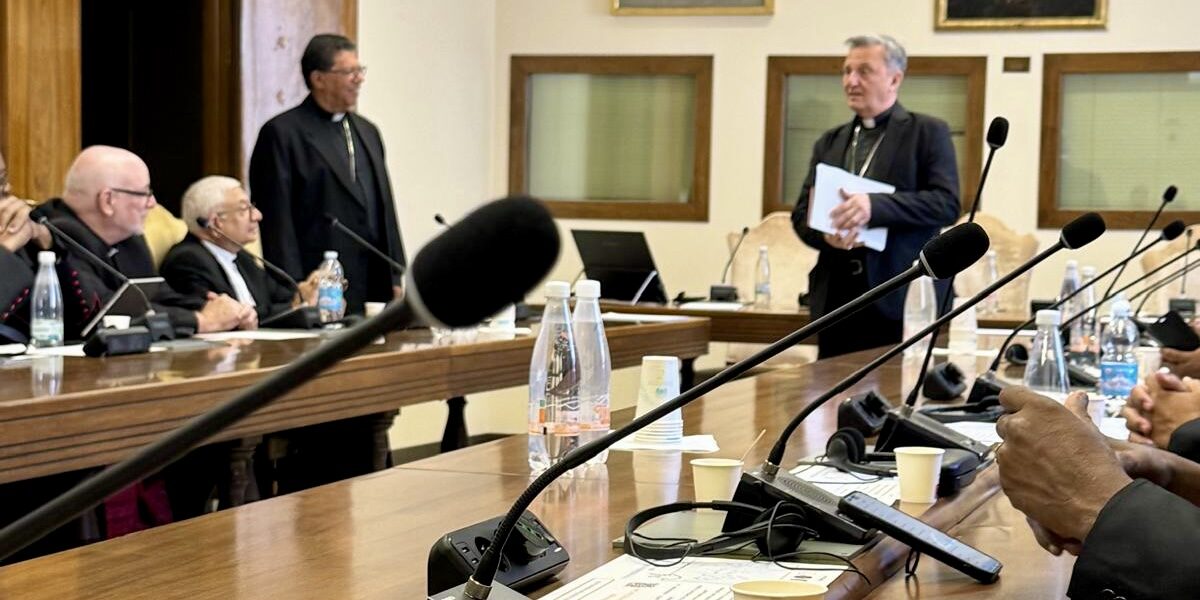
When the bishops of the Antilles Episcopal Conference (AEC) gathered in Rome for their Ad Limina visit, much was said about synodality. Yet beneath the formal conversations and theological clarifications, a quieter yet more profound insight emerged for me: synodality, or key aspects of it, is already being lived in the Caribbean.
This realisation carries significant implications, particularly for Caribbean theology. While the Universal Church has called for a deeper reception of the Final Document of the Synodal Assembly (2024), which invites local Churches to root synodality in their lived realities, the Caribbean has yet to fully explore its traditions as sources of theological insight. In many ways, we have been searching for something already present among us.
Consider first the experience of indigenous communities in the Guianas. Although often marginalised in theological reflection, these communities embody a deeply relational worldview. Decision-making is rarely individualistic. It is communal, patient, and attentive to the wisdom of elders, the rhythms of nature, and the well-being of the whole. Listening is not a technique but a way of life. Silence, storytelling, and shared memory all play a role in discernment. Is this not, in essence, what the Church now describes as “walking together”?
Yet Caribbean theology has only lightly engaged with these traditions. While theology in the region has shifted from imported frameworks, shaped more by European or North American categories, to the lived epistemologies of Caribbean peoples, we still have further theological dialogue with indigenous communities about the wisdom of their synodal way of life.
A similar dynamic is evident in the lives of religious congregations and ecclesial communities. Long before synodality became a central ecclesial theme, many religious communities in the Caribbean were practising communal discernment. Chapter meetings, shared decision-making, and the search for God’s will through prayer and dialogue have been integral to their way of life. Even in times of decline or transition, this charism of listening together remains a gift to the wider Church.
As the Ad Limina discussions revealed, the Caribbean has not fully received or integrated this gift at the diocesan and parish levels. There remains a gap between what is lived in certain communities and what is practised across the broader Church. Caribbean theology must therefore ask: how can the wisdom of religious life inform a more synodal Church? What would it mean to take these practices seriously as theological resources rather than simply internal disciplines?
Perhaps the most overlooked space of all is ordinary Caribbean life. In villages, families, and neighbourhoods across the region, a culture of consultation and shared life often goes unnoticed. People gather under trees, on verandas, and in community spaces to talk, listen, argue, and ultimately find a way forward together. It is messy, informal, and deeply human, yet profoundly synodal. I think of the grassroots inspiration behind Bob Marley’s Reggae lyrics, often drawn from communal conversations among Rastafarians in tenement yards, accompanied by marijuana use.
This “vernacular synodality” challenges some of our more formal or structured approaches. It reminds us that synodality is about relationships. It is about trust, patience, and the willingness to remain in conversation even when tensions arise. As the Synod Secretariat emphasised during the Ad Limina, synodality is not about eliminating conflict but about holding it together in a deeper search for truth. Caribbean societies, shaped by diversity and complexity, have long practised this art in their own way. Yet, despite these rich resources, Caribbean theology has often overlooked them. There has been a tendency to treat synodality as something to be implemented rather than to become aware. The result is a disconnect: while the language of synodality grows, the lived reality that could sustain it remains underexplored.
This is precisely one of the challenges and opportunities emerging from the Ad Limina. Caribbean theologians are invited to undertake a task of retrieval and reinterpretation, discerning in our histories, cultures, and practices the seeds of a genuinely Caribbean synodal theology. Such a theology would offer something distinctive to the wider Church. It would show how synodality can take root in cultures shaped by colonial rupture, migration, and pluralism. It would demonstrate how listening, dialogue, and communal discernment can arise from contexts of diversity and tension. In this sense, the Caribbean could offer not only a local practice of synodality but also a prophetic witness to the Universal Church.
This task, however, demands that theologians, pastors, and lay leaders alike take the Synod’s invitation seriously: to listen more deeply to the people, the culture, and the Spirit at work within them. It calls for new forms of theological reflection that engage oral traditions, cultural practices, and lived experiences as authentic sources of insight. The Ad Limina made one thing clear: the journey toward a synodal Church is about awareness of what God has already been doing among us. In the Caribbean, we may discover that we are not learning how to walk together for the first time.