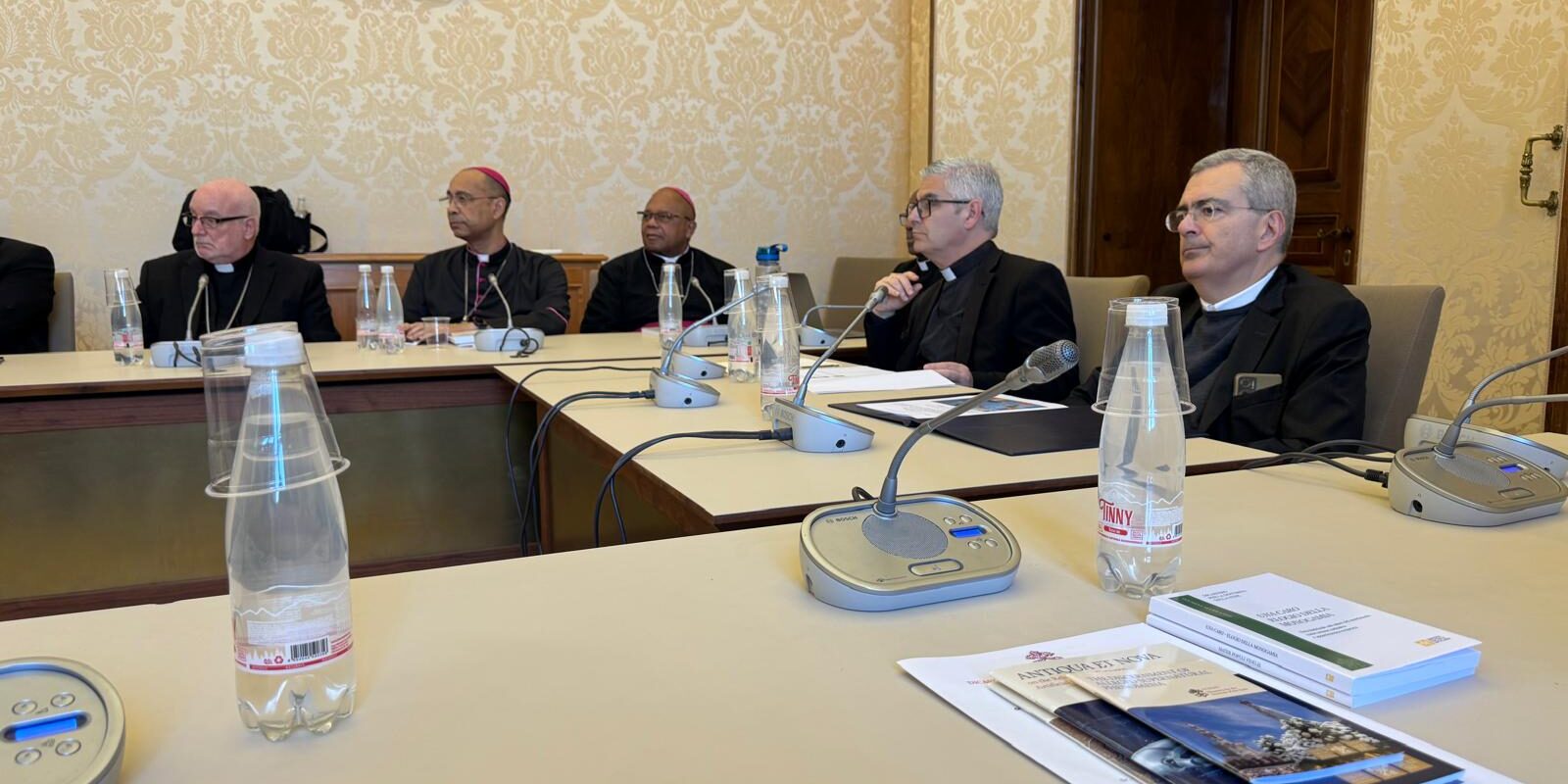
One detail from the recent Ad Limina visit of the bishops of the Antilles Episcopal Conference (AEC) to Rome continues to occupy my prayer and reflection. It may have been merely an administrative scheduling decision. Yet, seen through the eyes of faith, it reveals something profound about the Church’s mission today.
On April 29, the bishops met with the Dicastery for the Doctrine of the Faith. The following day, they met with the Secretariat of the Synod. This sequence is significant. Before discussing synodality, the bishops were invited to reflect on the transmission of the faith. Before discussing the “new way of being Church,” they were challenged to consider the Church’s purpose.
At the Dicastery for the Doctrine of the Faith, Cardinal Víctor Manuel Fernández posed a question that cuts to the heart of the Church’s mission: How is faith in Jesus Christ transmitted today in the Antilles? The discussion quickly highlighted the growing fragility of the traditional places where faith was once handed on naturally, namely the family and Catholic schools. Yet the Cardinal challenged the bishops to look deeper. The problem is not merely what we teach but how we transmit it. Too often, faith has been reduced to moral instruction rather than a living encounter with Jesus Christ. The kerygma, the joyful proclamation that Jesus loves us, saves us, and walks with us, must once again become central. Faith is transmitted not simply through information but through relationships, community, belonging, and personal encounter.
The following day, the bishops met Cardinal Mario Grech and the Secretariat of the Synod. The conversation then shifted from the content of faith to the culture in which faith is lived and shared. Cardinal Grech reminded the bishops that synodality is not primarily a programme, strategy, or structure. It is a way of journeying, listening, and discerning together, allowing the Holy Spirit to guide the Church. Synodality is not democracy. It is communal discernment rooted in communion and mission.
Reflecting on these two meetings together, a powerful insight emerges. The transmission of faith and synodality are not competing priorities. Rather, each gives life to the other. The kerygma is the heart; synodality is the body. The transmission of faith is the mission; synodality is the way we carry it out. Without the kerygma, synodality risks becoming merely a process, a set of meetings, consultations, and conversations. Without synodality, the kerygma risks becoming a message proclaimed without relationships, participation, or community. The two belong together.
This insight was deepened during Pope Leo XIV’s audience with the bishops. Speaking with pastoral warmth, the Holy Father emphasised the indispensable importance of the bishop’s spiritual life. Using the image of cultivating soil, he reminded the bishops that fruitful ministry depends on the quality of the ground from which it grows. Before planting, one must prepare the soil. Before expecting fruit, one must tend the roots. The Pope’s image provides the missing piece in the relationship between kerygma and synodality. If the transmission of faith is the seed and synodality is the method of cultivation, then the spiritual life is the soil. In the words of Sr. Debbie De Rosia, “as the kerygma is proclaimed, it deepens into discipleship and synodality.”
A Church that neglects its interior life will struggle to proclaim the Gospel convincingly. A Church that loses sight of Jesus Christ will find itself endlessly discussing structures while yielding little missionary fruit. Likewise, a Church that proclaims Christ yet fails to cultivate listening, participation, and discernment will find it increasingly difficult to transmit the faith to new generations.
This is perhaps one of the most important lessons to emerge from the AEC’s Ad Limina experience. The Church’s primary task remains what it has always been: helping people encounter Jesus Christ. Every structure, ministry, pastoral plan, synodal process, school, parish, and movement must ultimately serve that purpose. Synodality does not replace evangelisation. It serves evangelisation.
The Church listens because she wishes to proclaim Christ more effectively. She discerns because she wishes to discover where the Holy Spirit is opening hearts to the Gospel. She journeys together because faith itself is transmitted through relationships and communities of belonging.
In the Caribbean today, where many families struggle to pass on the faith and younger generations increasingly seek meaning elsewhere, this lesson is particularly urgent. We must resist the temptation to separate mission from method. The transmission of faith remains the heart of the Church. Synodality is the means by which that heart pumps life through the entire body.
Perhaps the sequence of those Roman meetings was accidental. Yet sometimes providence speaks through schedules. The bishops were first reminded of the kerygma, then of synodality, and finally of the spiritual life that sustains both. The order matters. Prepare the soil. Plant the seed. Cultivate the harvest.